Atebubu, Bono East Region, Saturday, August 22, 2026
The Chiefs and people of the Bono regions have marked the fifth anniversary of the Meko Bono Homecoming & Cultural Festival, reaching a ceremonial climax at the Unity Grounds in Atebubu with the Kwakye Adeɛfɛ Grand Durbar. The event brought together traditional rulers, government officials led by Her Excellency Prof. Jane Naana Opoku-Agyemang, Vice President of the Republic of Ghana, cultural groups, invited dignitaries, sons and daughters of Bonoman, and elated participants from across the country and beyond.
The 2026 edition of the annual festival, hosted by Atebubu, was celebrated under the theme, “Honouring Our Roots, Shaping Our Future through Active Participation.” It served as a reminder to Bonoman that the celebration of their rich heritage, culture, and identity must perpetually be done through united, active participation with development as the goal. As hosts, Atebubu pioneered an international launch of the festival in the United States of America in April 2026, following a domestic launch in March of that year.
Eight Days of Culture, Homecoming, and Participation
Activities for Meko Bono 2026 began on Saturday, August 15, with a community clean-up exercise ahead of the official festival week. On Sunday, August 16, attention turned to football before the festival formally opened on Monday, August 17. The opening ceremony brought together Nananom, government officials, community leaders, residents, and visitors, with Hon. Francis Owusu Antwi, Bono East Regional Minister, chairing the occasion.


Over the following days, Atebubu was transformed into a vibrant hub of Bono culture, spirituality, entertainment, and community engagement. The event featured Bono Nkomo, a strategic dialogue focused on the progress of Bonoman, alongside a health screening exercise. A lively indigenous foods cooking contest and a prestigious Bono Hemaa Pageant followed, led by esteemed queen mothers Nana Afia Donyina II (Atebubumanhemaa), Nana Akosua Asor Duah Brayie (Sunyanimanhemaa), Ohemaa Pokua Afoa Dankoto II (Wenchimanhemaa), Nana Yaa Adansi Puduo II (Odumase No. 1 Manhemaa), Nana Abena Frimpomaa Kese (Abease Manhemaa), and Nana Yeboah Pene II (Chiraahemaa). The celebration of culture was also infused with contemporary entertainment, featuring a high-energy street carnival, the “Lake Experience”—a fun boat trip in Yeji—and a star-studded artistes’ night.


These activities attracted strong public participation and reflected the diversity that Meko Bono seeks to promote. From ancestral traditions and indigenous cuisine to preventive healthcare, tourism, music, and youth participation, the festival provided different generations with opportunities to reconnect with their heritage while building new relationships.


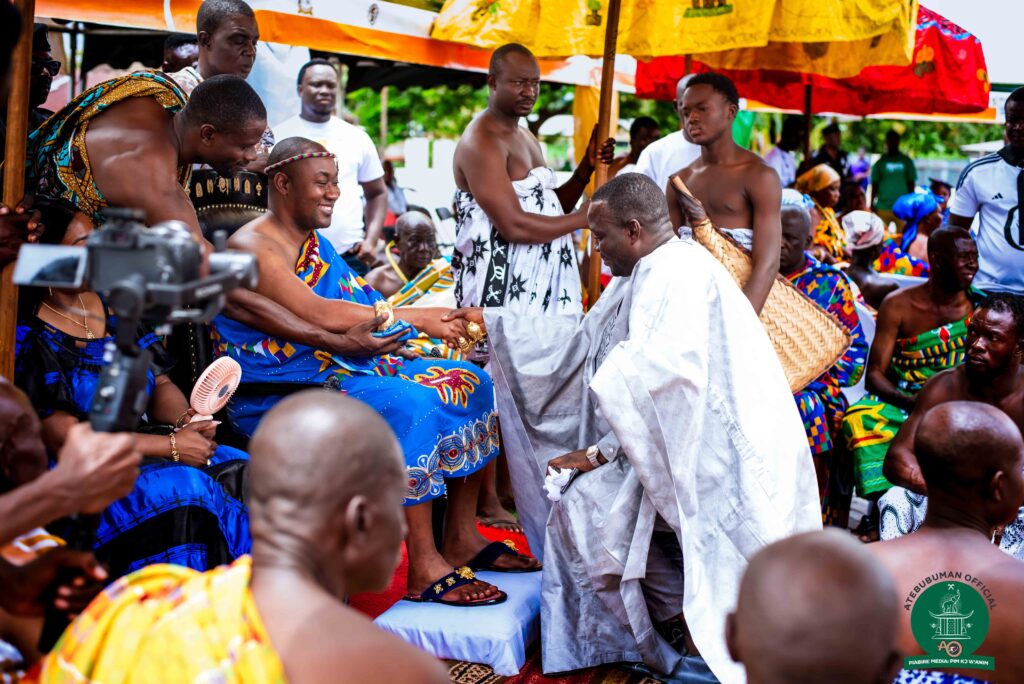
The celebrations culminated on Saturday, August 22, at the Unity Grounds in Atebubu with the Kwakye Adeɛfɛ Grand Durbar, the principal royal and ceremonial gathering of the festival.
Ohempon Calls for Unity, Development, and Active Participation
In his welcome and opening remarks at the durbar, HRM Ohempon Dr. Yeboah Asiamah, Atebubumanhene, host of the 2026 edition of the festival and Chairman of the Meko Bono Advisory Board, reminded the gathering that Meko Bono was conceived not merely as another festival, but as a platform through which the Bono people could reconnect with their common ancestry and culture and turn that renewed sense of identity into a force for collective development.

“Meko Bono seeks to bring our people together, reconnect with our roots, celebrate our heritage, and, most importantly, use that unity to advance the development of our communities,” he said.
He also challenged the different generations to see the festival from a broader perspective. “The elderly,” he said, “should take pride in seeing the stories and vision of the ancestors preserved; the youth should understand that progress towards a brighter future must remain informed by roots; and leaders must channel the energies of both young and old into building a dignified future for Bonoman, Ghana, and Africa.”
Ohempon’s central message was forward-looking: the strength of Bonoman should be measured not only by the greatness of its past, but also by what its people are prepared to build together for generations yet unborn. He therefore urged that the annual Meko Bono Homecoming and Cultural Festival remain a rallying point for Bonoman’s commitment to unity and development through active participation.
Ohempon expressed appreciation to Nananom, the Vice President and her accompanying officials, sponsors and partners, the Meko Bono leadership and organizing team, volunteers, security agencies, the media, and all those whose contributions made the 2026 festival possible. He particularly welcomed Bono sons and daughters who had travelled from other parts of Ghana, the subregion, the diaspora, and beyond to celebrate and reconnect with their roots.
Nsawkawmanhene Urges Unity, Protection of Bono Heritage, and Youth Participation in Development
The Chairman of the durbar, HRM Daasebre Okogyeaman Duodu Ampem II, Nsawkawmanhene, commended the organizers of Meko Bono, the host traditional area (Atebubu), and all those who contributed to the successful celebration of the festival. He stressed the importance of maintaining unity among the Bono people and urged Nananom and citizens alike to strengthen the bonds that have historically connected the various Bono states and communities.

“At the heart of the festival are heritage, progress, and collective responsibility. The festival, therefore, should continue to provide a common platform where differences can be set aside and the shared interests of Bonoman placed above individual and sectional considerations,” he said.
Calling on the youth of Bono, he emphasized the value of their participation in the development journey. “The future of our land will not be built by heritage alone, but by discipline, education, innovation, entrepreneurship, and active citizenship. Embrace technology without abandoning culture; pursue global excellence without losing your local identity; and transform your talents into opportunities that create jobs and prosperity,” he said.
Vice President Calls for Peace, Cultural Pride, and Inclusive Development
Her Excellency Professor Jane Naana Opoku-Agyemang, Vice President of the Republic of Ghana, whose presence reflected the national significance of the festival, commended the people of Bonoman and the organizers for sustaining a festival deeply rooted in culture, identity, and community participation.

She encouraged the people to remain focused on the broader objectives of Meko Bono and to continue using culture as an instrument for strengthening peace and social cohesion. The Vice President emphasized that development can thrive only in an atmosphere of peace and cooperation. She therefore urged traditional leaders, political actors, the youth, and all citizens to protect the peace enjoyed within their communities and work collectively toward national development.

She further reaffirmed the Government’s commitment to policies and initiatives aimed at improving the lives of Ghanaians, assuring the gathering that Bonoman will continue to receive its fair share of national development. Her message complemented the festival’s theme by underscoring the connection between cultural identity, peaceful coexistence, citizen participation, and sustainable development.
Minister of Tourism, Culture, and Creative Arts Commends the Celebration of Heritage
Hon. Dzifa Abla Gomashi, Minister of Tourism, Culture, and Creative Arts, conveyed her pride in and support for the united celebration of Bono culture. She reiterated the commitment of her ministry to continue celebrating and elevating Ghana’s rich culture as an important, distinct element in the rich tapestry of African identity.

Regional Minister Highlights Development Across Bono East and Importance of Traditional Leadership Support
In his goodwill message, the Bono East Regional Minister, Hon. Francis Owusu Antwi, congratulated Nananom, the Meko Bono leadership, and the people of Atebubu for successfully hosting the fifth Meko Bono festival. He used the occasion to highlight ongoing development initiatives within the Bono East Region, including improvements in education and road infrastructure.

He referred, among other interventions, to efforts toward expanding tertiary teacher education through the addition of two Colleges of Education in Bono East, as well as ongoing road infrastructure and other government development projects within the region. He assured the gathering of the government’s commitment to improving infrastructure, expanding opportunities, and ensuring that Bono East benefits from national development programs.
The Minister also recognized the value of traditional leadership and festivals such as Meko Bono in mobilizing communities around a common identity. “Beyond preserving culture,” he noted, “these provide an important platform for government, citizens, investors, and development partners to interact and focus attention on the developmental priorities of the region.”
Dormaahene Leads Development Appeal for Job Creation
A major feature of the Grand Durbar was the Fundraising and Development Appeal, led by HRM Osagyefo Oseadeeyo Agyeman Badu II, Dormaahene and President of the Bono Regional House of Chiefs. He drew attention to the development dimension of Meko Bono, stressing that the success of the festival should ultimately be reflected in tangible improvements in the lives of the Bono people.

Central to his appeal was the construction and equipping of a maize processing plant at Odumase No. 1, funded through the Meko Bono initiative. He presented the project as an example of how a cultural homecoming could be transformed into a practical vehicle for economic development and employment creation. He called on individuals, businesses, traditional leaders, institutions, and Bono citizens in the diaspora to contribute financially toward such initiatives.
His appeal emphasized a philosophy of development through collective effort: rather than waiting for outside assistance, Bonoman must increasingly mobilize its own people and resources to support projects capable of creating jobs, stimulating local economies, and improving livelihoods. HRM Osagyefo Agyeman Badu II urged those present, as well as Bono citizens worldwide, to support Meko Bono’s development agenda and help establish a sustainable pool of resources for future job creation and community development projects.
Krachiwura Calls for Cohesive Traditional Leadership to Drive Development
Delivering his goodwill message, HRM Nana Mprah Besemuna III, Krachiwura, drew the gathering’s attention to the demand for active participation within the theme of Meko Bono 2026.
“No traditional area can rise and prosper in isolation. We need one another, and we need dependable friends with whom we can stand in both good and difficult times. If our ancestors could stand together in times of war, surely we, their descendants, should stand together in these times of peace to promote development, preserve our cultures, and improve the welfare of our people,” he urged.
He called on the chiefs present to strengthen their bonds across traditional boundaries and work together to promote peace, development, and the preservation of the dignity of the chieftaincy institution.
Nana Ama Kwakye Reflects on Five Years of Meko Bono
Reflecting on five years of Meko Bono, Nana Ama Kwakye, Chief Executive Officer of Bonofie and originator of the festival, highlighted the growing recognition of the celebrations, the partnerships built along the way, and the challenges that have accompanied the effort to establish a sustainable platform capable of bringing Bono people together across traditional areas, regions, and national borders.

She called for a stronger and more united front among the people of Bono, stressing that the future of Bonoman cannot be shaped by a few individuals alone. Using her own involvement in Meko Bono as an example, Nana Ama encouraged individuals, businesses, professionals, traditional leaders, young people, and members of the diaspora to ask what they could personally contribute toward the advancement of Bono. She stressed that active participation requires moving from simply identifying with Bono to contributing one’s resources, ideas, expertise, influence, and time toward its development.
Kofi Kinaata, Kweku Smoke Entertain Swathes of Youth
The Kwakye Adeɛfɛ Grand Durbar culminated in a youthful, nightlong celebration of a successful festival by hundreds who thronged the Unity Grounds in Atebubu to enjoy electrifying performances by Kofi Kinaata and Kweku Smoke.


From Cultural Celebration to a Development Movement
The Kwakye Adeɛfɛ Grand Durbar brought together the central messages that had run throughout Meko Bono 2026: heritage, unity, participation, and development. The week demonstrated the breadth of Bono identity: Akom connected participants with spirituality and ancestral traditions; Bono Nkomo created space for intergenerational engagement; the Royal Cooking Contest brought indigenous foods and culinary traditions into focus; the health screening promoted wellbeing; the Lake Experience showcased tourism; the Bono Hemaa Pageant celebrated womanhood and culture; and the Street Carnival brought color, music, and popular participation into the celebration.


The Grand Durbar, held with the august participation of the Vice President of Ghana and the country’s Minister of Tourism, Culture, and Creative Arts, among other government officials, cemented the conviction of the organizers that Meko Bono—beyond being an annual cultural gathering—is a platform on which the people of Bono can reconnect across traditional areas and geographic boundaries, mobilize resources, support development projects, promote local enterprise, create opportunities for young people, and strengthen a common Bono identity.

As Meko Bono 2026 came to its climax at the Unity Grounds, the call from Atebubu was, therefore, both celebratory and purposeful.


What a splendid organization culminated with all kinds of beautiful culture.