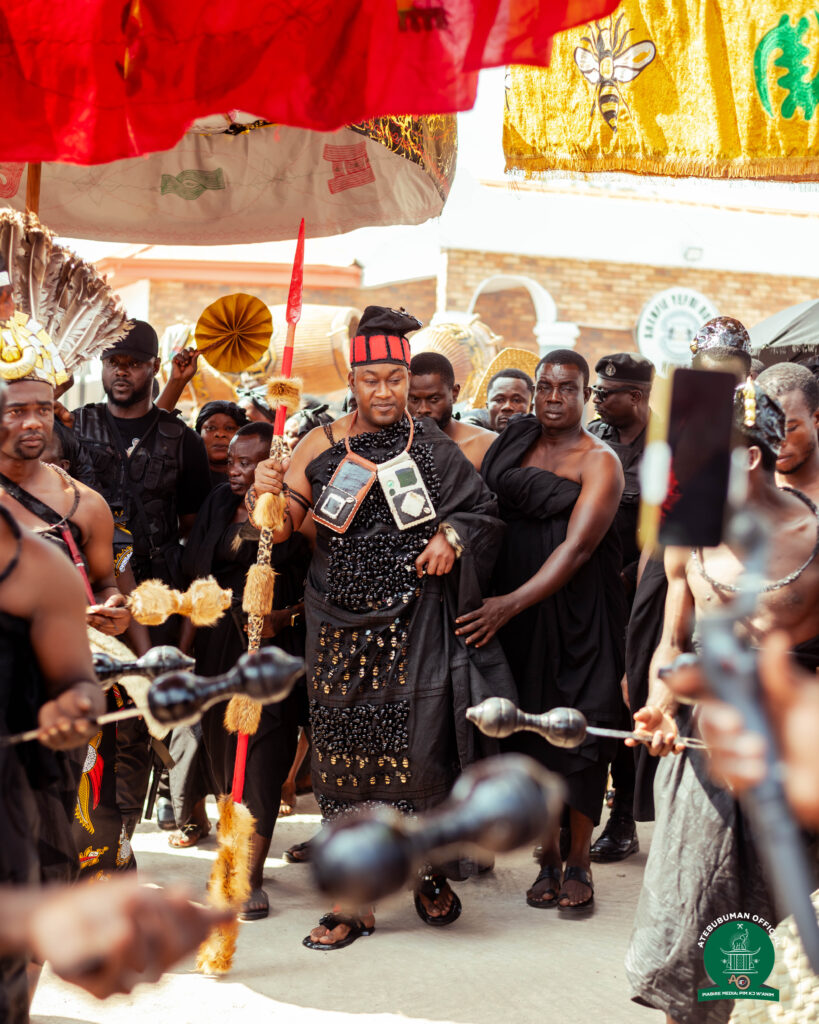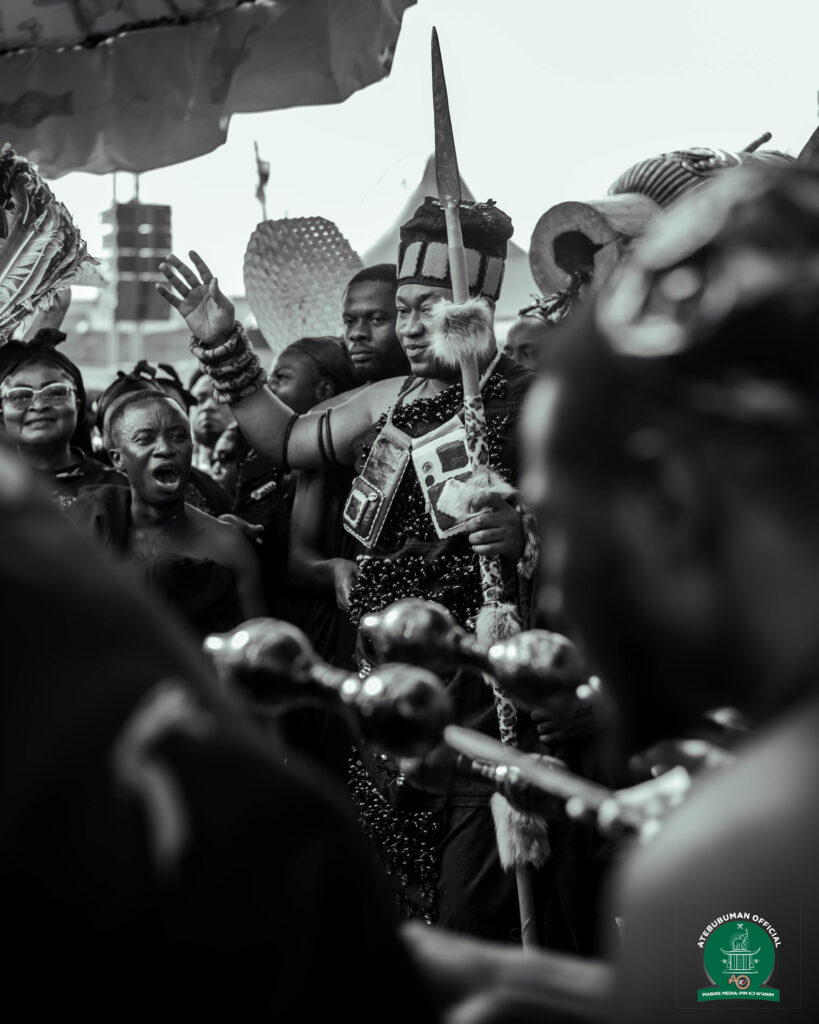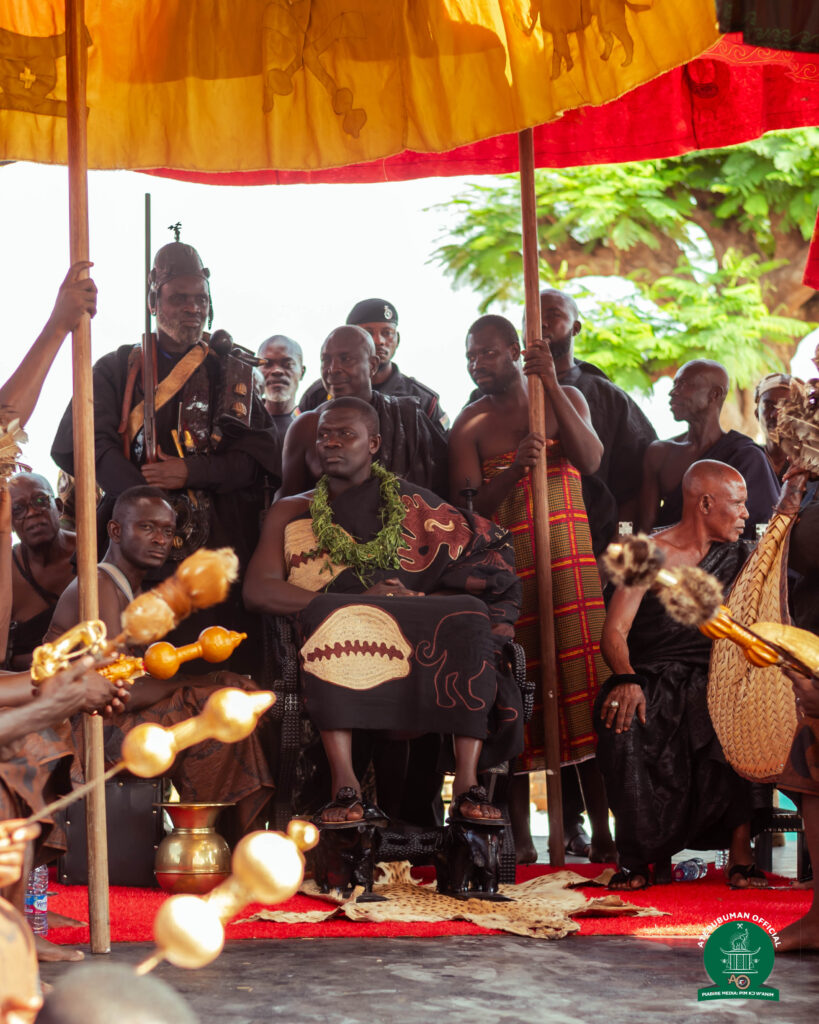
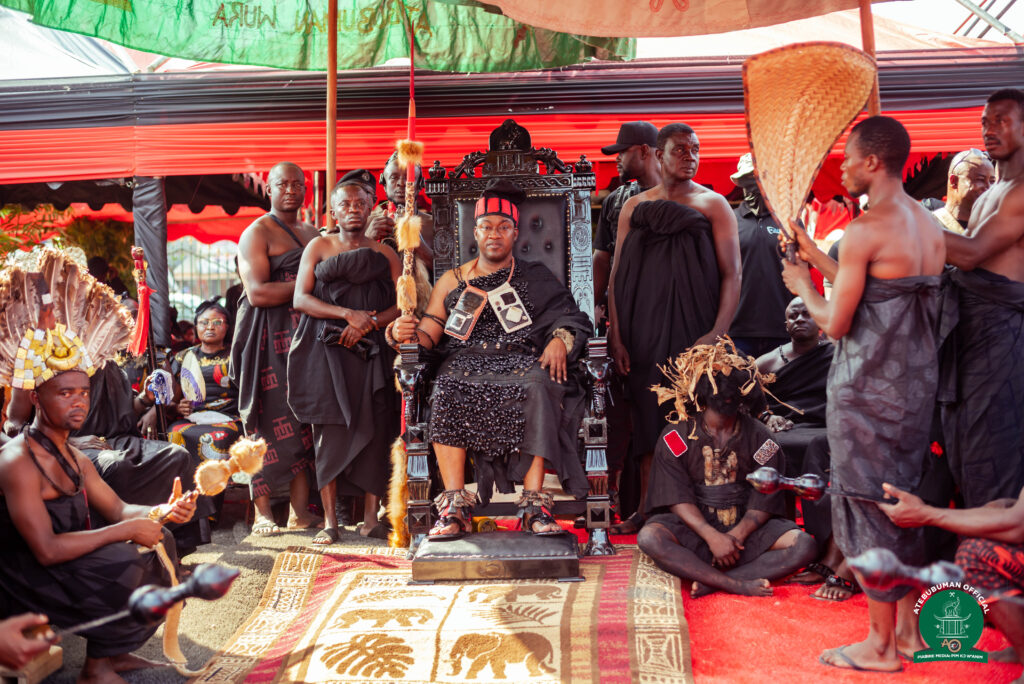
On Thursday, 27th November 2025, HRM Ohempon Dr. Yeboah Asiamah, Paramount Chief of Atebubu Traditional Area, led a distinguished delegation of chiefs and people of Atebubu to Wenchi to partake in the traditional burial rites (Dote Yie) of Nana Atoaa Ampoforo Twewaa Otosuo Sramangyedua III, late Queenmother of Wenchi Traditional Area, who served Wenchiman for forty-seven years with grace, wisdom and dignity. She was offered a befitting burial that also provided a solemn occasion for reflection on a Queenmother widely celebrated for her wisdom and nurturing spirit. The attendance of Ohempon and his retinue of chiefs reflected the historical ties between Atebubu and Wenchi.
A Cultural Display of Royal Significance
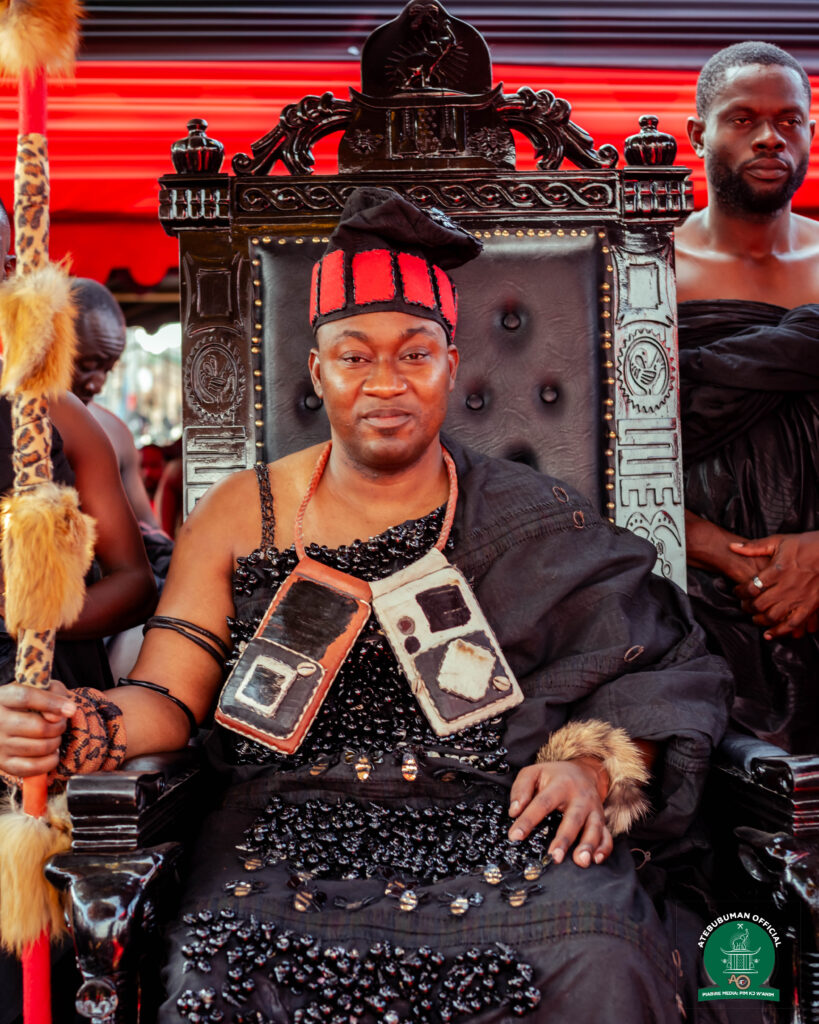
The burial rituals, undertaken strictly in accordance with Wenchi customs, was punctuated with an enthralling display of culture. A poignant aspect was the rare cultural symbolism of Ohempon’s regalia. He wore a sacred ancestral cloth known as “Wɔntumi ne Nyɔnyɔma (Wowa) empire tenabea”—to wit, one cannot contend with the bees for a place of abode or permanent settlement. This vintage royal fabric, preserved within his lineage for over a century, was handed down from his great-grandfather, Nana Gyan Kwaku, a renowned warrior-statesman.
The cloth embodies a profound philosophical lesson: one must not challenge a united, well-organized, and determined force. It is adorned with the bee insignia and black cowries, symbols that emphasize wisdom, restraint, and deep respect for collective strength.
Bees hold particular historical significance in Atebubu. In pre-colonial times, they were deployed as instruments of defense during warfare. Their depiction on the cloth therefore represents strength, protection, resilience, and the enduring power of community.
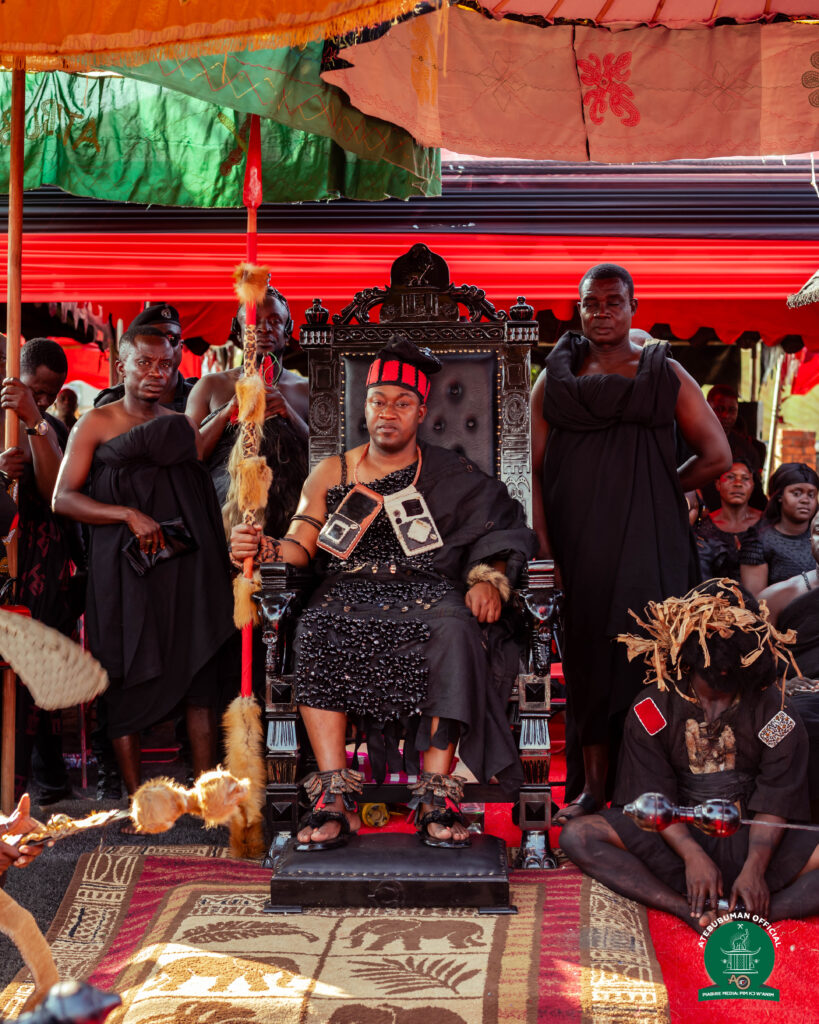
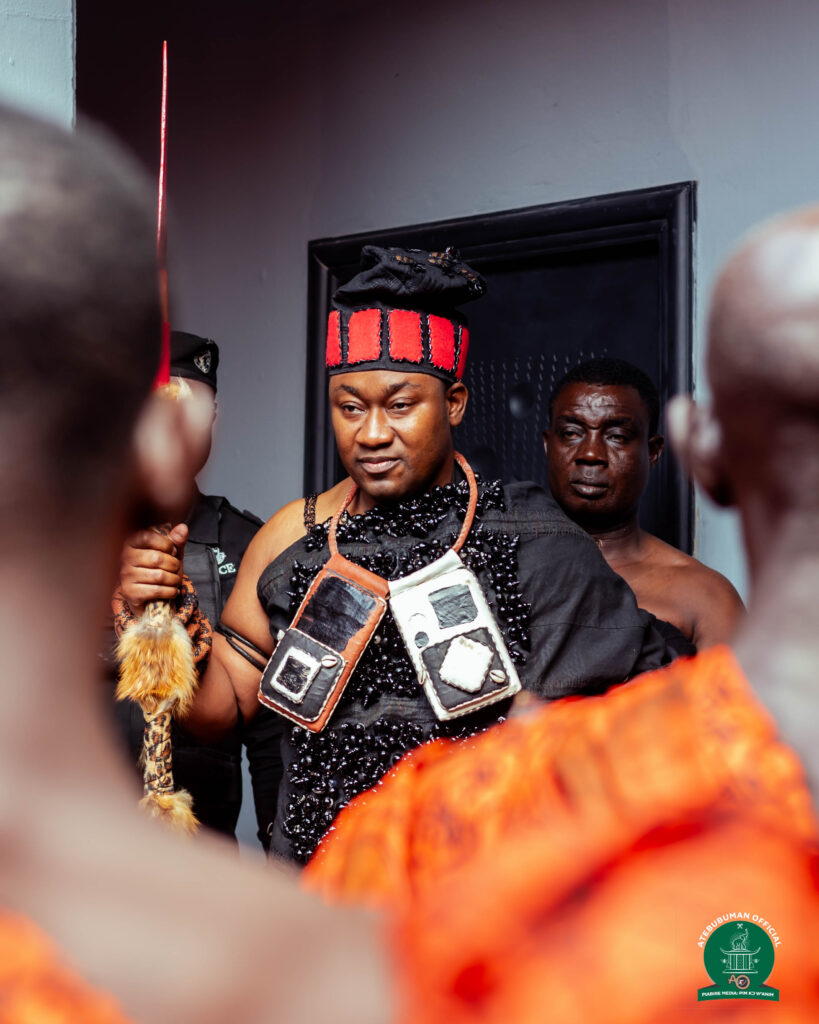
Complementing Ohempon’s regalia was the royal spear, Piabire, an ancestral state relic passed down from his great-great-grandfather, Ampong Yirenkyi I. The legendary spear memorializes the alliance of Atebubu and other ancient Akan states, including Beposo, Kumawu, Nsuta, and Kwaman, among others, in defeating Ataalefram in a historic seven-year war fought from 1690 to 1697.
The spear, raised at the funeral grounds, symbolized authority, solidarity, protection and unwavering support for Wenchi during their moment of grief. By wielding it at the Dote Yie, Ohempon communicated that the people of Atebubu stood firmly with Wenchiman in compassion, loyalty and kinship.
Gesture of Compassion and Solidarity
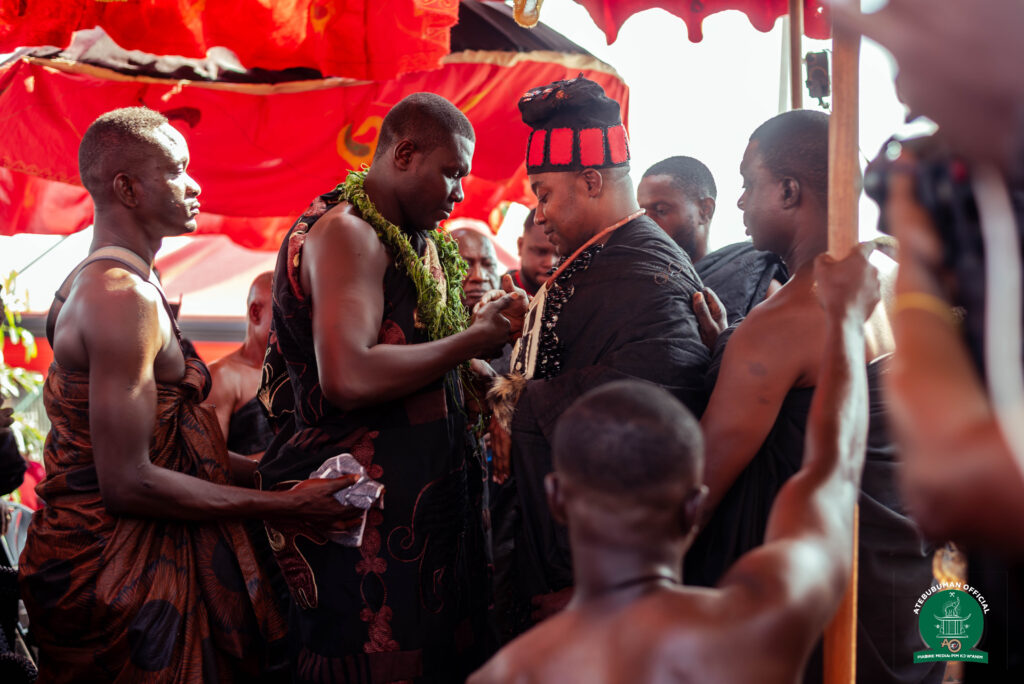
Although customarily, Ohempon is not required to make material donations during such rites, his compassion prevailed. He presented cash, a box of schnapps and assorted drinks to support Nananom and the people of Wenchi. This gesture exemplified empathy and the discharge of communal responsibility.
Celebrating a Queenmother Worthy of Honor
Nana Atoaa Ampoforo Twewaa Otosuo Sramangyedua III is remembered for nurturing families, promoting the dignity of women, and serving Wenchiman with tolerance, stability and foresight. Her Dote Yie was an occasion of reflection on a life that strengthened institutions, preserved heritage and shaped generations. Her legacy remains alive in the values she instilled, the structures she guarded and the unity she fostered among her people.
Atebubu and Wenchi: Shared History, Shared Destiny
The event served as a reminder that traditional leadership is not only custodial, but deeply relational. Through his participation, Ohempon reaffirmed Atebubu’s commitment to preserving ancient alliances, fostering cultural harmony, and strengthening cooperation among traditional areas.